.png)
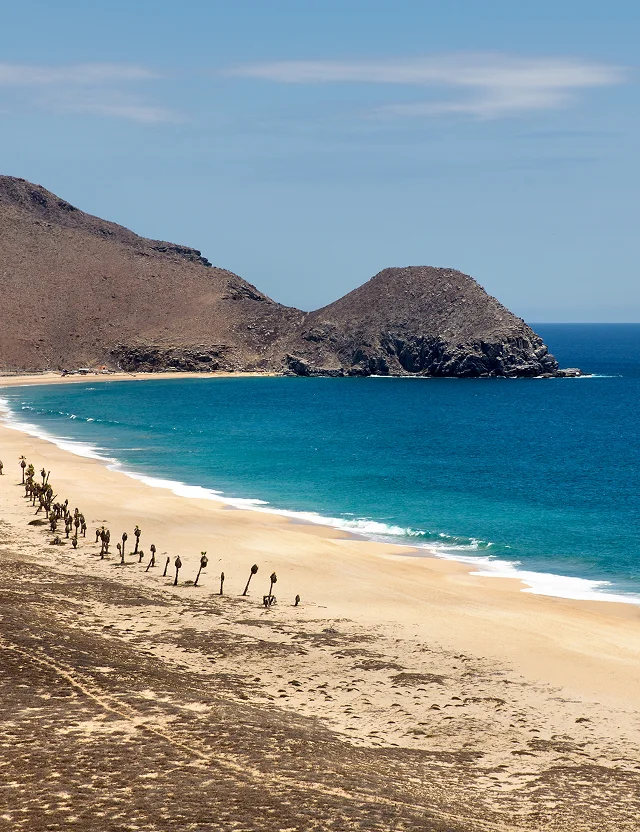



More demanding breaks
San Pedrito and La Pastora are often grouped together when surfers talk about more advanced waves around Todos Santos, but they are not interchangeable. Bottom, exposure, speed, entry and margin for error differ. For a solid intermediate or advanced surfer, those distinctions matter more than any “best surf spots” list.
This comparison does not promise conditions and does not replace local observation. Its purpose is to help you know what to evaluate before paddling out and when another break is the smarter decision. For the broader destination overview, use the Todos Santos surf hub.
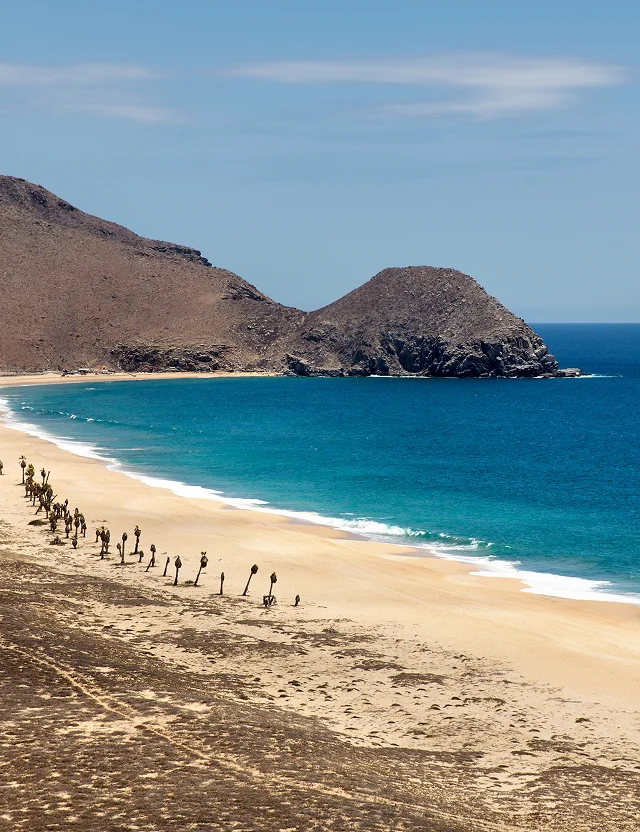
San Pedrito: more technical than the idea of a generic surf beach
San Pedrito sits near El Pescadero and represents a clear step away from Cerritos. Its rocky bottom changes both wave behavior and the consequence of falling. When the break has energy, surfers can find faster sections and more power. That rewards efficient paddling and decisive takeoffs while punishing hesitation more than a forgiving sand-bottom whitewater session.
The word “intermediate” needs context. Consistently standing up is not enough. A surfer ready for San Pedrito should be able to read where the wave is breaking, stay out of other surfers' lines, control the board in stronger whitewater and exit a section without relying on a soft bottom. If takeoffs still take multiple attempts, Cerritos is usually the smarter environment for progression.
Tide matters because depth over rock changes the margin for error. We avoid publishing one universal “best tide”: swell size and the actual state of the break matter. Watch how the spot is working and ask local surfers if the entry and bottom are unfamiliar.
La Pastora: exposure, energy and less room for improvisation
La Pastora lies north of Todos Santos and feels more open to the Pacific. That exposure is part of the attraction when suitable energy arrives, but it also means the break should never be treated as an automatic substitute for San Pedrito. Longer-period swell can translate into more size and current than a casual glance at a forecast suggests.
For an advanced surfer, La Pastora can be memorable when direction, wind and size align. For a first-time visitor, the challenge begins before paddling: identify the entry, see how the lineup drifts, recognize acceleration zones in the current and confirm that there is a practical way out. The first set you see rarely tells the full story.
There is also a psychological difference. At Cerritos, schools and learners can create an assumption of basic accessibility. At La Pastora the safer mindset is the opposite: assume the break may exceed your expectation and look for evidence that the session is inside your range, rather than evidence that you can probably get away with it.
Technical because of bottom and speed
- Rocky bottom makes tide and line choice more consequential.
- Takeoff and rail control are more demanding than Cerritos.
- Can suit solid intermediates and advanced surfers.
- Entry and exit should be understood before paddling.
More exposed and judgment-dependent
- Greater exposure to Pacific energy.
- Can gain meaningful size with longer-period swell.
- Best suited to surfers with real open-ocean experience.
- Current and exit deserve explicit observation.
Swell, period and wind: why the same number does not mean the same surf
Modeled wave height is only one variable. Period describes time between dominant wave crests and often indicates how much organized energy has traveled toward the coast. Direction determines how directly that energy reaches a break. Wind can improve or disrupt the surface even when swell remains unchanged.
At San Pedrito, a particular approach angle and bottom interaction can organize the wave; another combination may spread the energy differently. La Pastora's exposure can make it respond with more size to clean incoming energy. This is why a rule such as “five feet equals intermediate” should never be moved mechanically from one break to another.
For a foundation in those variables, read how to read a Todos Santos surf forecast. It covers height, primary swell, period, direction, wind, gusts and tide without treating a model as a guarantee.
Access, bottom and safety: what a camera cannot solve
Online reports help decide whether a drive may be worthwhile, but they cannot show every detail that defines a safe paddle-out. Sand movement, exposed rock, a localized current or changed access can alter the session. At rocky breaks, entering and exiting without understanding the channel can become harder than the surfing itself.
Before entering, identify three things: where knowledgeable surfers enter, where a typical ride ends and what your exit options are after a long hold-down or drift. If those answers are unclear, you still need more information. Asking locally is part of surfing a new break well.
Lineup behavior matters too. A geographically small takeoff zone can concentrate a crowd. Arriving as a visitor, paddling straight to the deepest point and competing for the first set is a poor way to understand local rhythm. Watch the pattern and integrate gradually.
Which should you choose? A decision route, not a winner
- Start with your real level, not the photo.If your takeoff is inconsistent or current still triggers panic, develop control at Cerritos first.
- Read direction, period and wind.Do not stop at the headline wave-height number.
- Evaluate bottom and exit.If you cannot explain where you will get out after a long ride or wipeout, observe longer.
- Watch several sets.A lull can hide the true size. Stay long enough to see a full pattern.
- Be willing to change the plan.The best session is not the one that lets you say you surfed La Pastora; it is the one you can surf with control.
FAQ
Is San Pedrito a beginner break?
It is not the break we would choose for a first surf experience. Its bottom and technical character make Cerritos more appropriate for learning and basic progression.
Is La Pastora always bigger than San Pedrito?
No. Exposure can make it respond strongly to certain swells, but actual size depends on direction, period, wind and the day.
Can I decide using Surfline or a forecast alone?
Use the forecast to decide whether the drive is worth investigating. Make the paddle-out decision after observing the ocean and, at an unfamiliar break, getting local context.
What season is most interesting?
Winter generally increases the chance of northern energy, but different combinations can work at other times. The season guide provides context without promising a specific window.
For mixed-level trips, separate objectives: a progression morning at Cerritos for learners, and only when conditions and experience align, a more technical session for stronger surfers. The rest of the day can return to Todos Santos, its food, art and coastline.
The right break is the one that matches the day and your level
Use Hotel Galería Guaycura as a town-and-coast base instead of tying the trip to one break. When the ocean says rest, El Faro keeps the Pacific in the itinerary without requiring a paddle-out.
.webp)
Get the best of Todos Santos before anyone else